

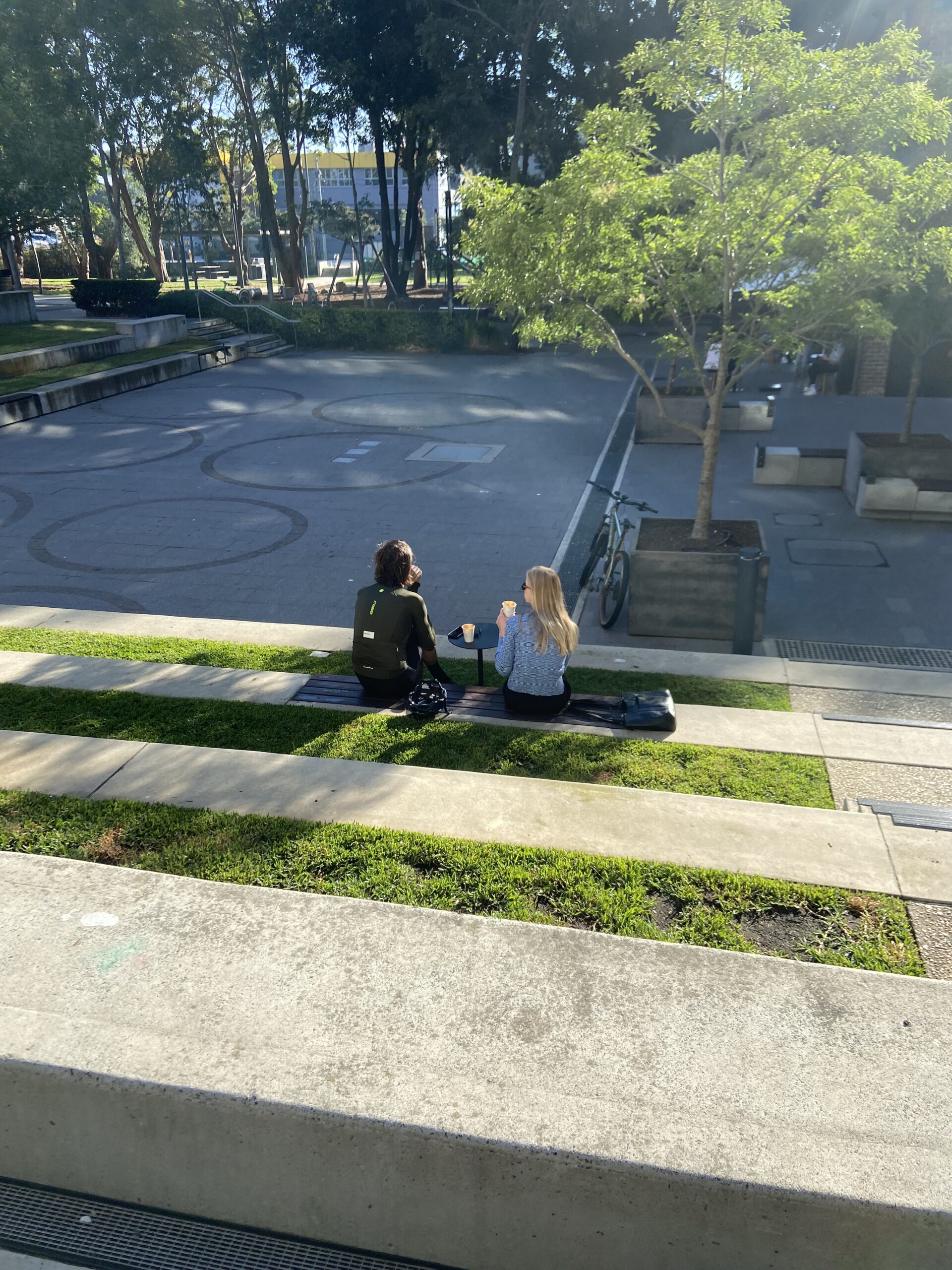
When the Flour Mill Business Collective was established, we surveyed residents about their experiences in our outdoor shared spaces. The feedback got us thinking about the psychology of space, connection, and community, and led us somewhere we didn’t expect.
The results were genuinely heartening. 55% of residents use the plaza for sitting and relaxing. 42% come specifically to meet neighbours and friends. 78% are doing this multiple times a week. The plaza is working — people are connecting, lingering, returning.
| 55% use the plaza for sitting and relaxing* | 55% come here to meet neighbours and friends* | 78% were doing this multiple times per week* |
But then came this: 44.5% of residents said they’d like to see more seating added.
So we did what any curious team would do. We went outside and counted.
Twenty-three seats in 3,000 square meters.
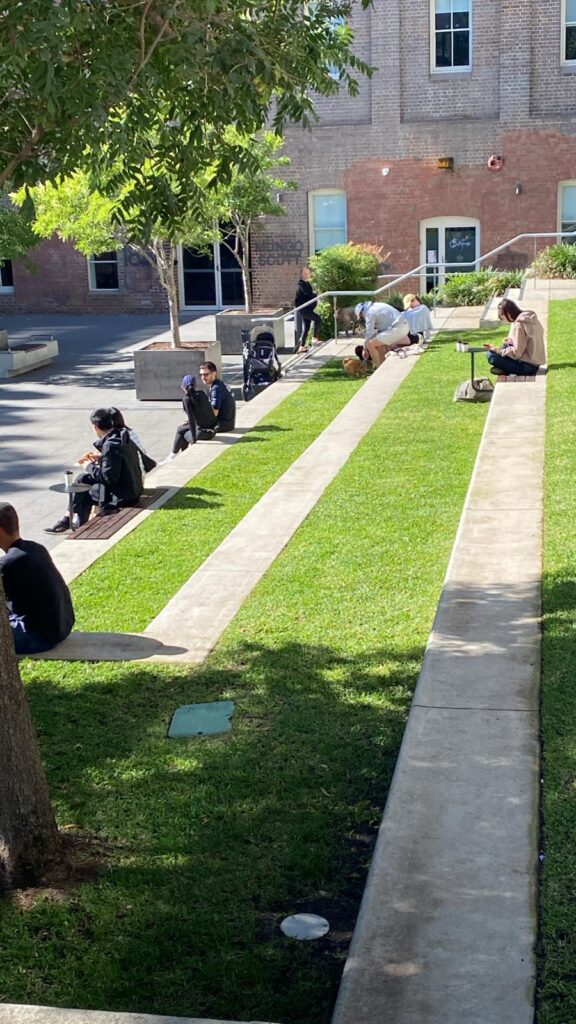
We found 23 dedicated seating spots across the plaza, benches, wooden ledges, and surfaces where two or more people can comfortably sit together**. In a ~3,000sqm space, that is, objectively, a generous provision. hat’s before accounting for the plaza’s most distinctive feature: the entire space is designed as a subtle amphitheatre of tiered steps and concrete surfaces where almost any edge is a seat. Add the indoor and outdoor seating of multiple on-site cafes and food retailers, and the number grows further.
The space wasn’t under-seated. It was under-inviting.
Our community wasn’t doing a furniture audit. They were describing a feeling. We heard it in their own words: “This area needs more comfortable seating in the shade.” “Ability to take a coffee cup out of the venue and sit in the park is needed.”**
People don’t just need a surface. They need to feel invited. Concrete steps read as architecture. A table with chairs reads as a welcome.
The research backs this up:
| Tables change behaviour. The arrangement of urban furniture significantly affects both the frequency and quality of social interaction. Urban Design International, 2021. | Variety — not quantity — dramatically increases how long people stay. Grouped seating encourages social use; isolated benches see brief, individual use. Project for Public Spaces; cited in GX Outdoors, 2025. | Triangulation prompts connection. An external stimulus, a table, a café setup, can prompt strangers to interact. Without it, people are physically present but psychologically closed. Whyte, W.H. (1980). The Social Life of Small Urban Spaces. |
They wanted to rest their coffee down. To linger after the markets. To stay long enough for a proper conversation with a neighbour. To put their things down, because putting things down is what humans do when they’ve decided to stay.
They wanted a table.
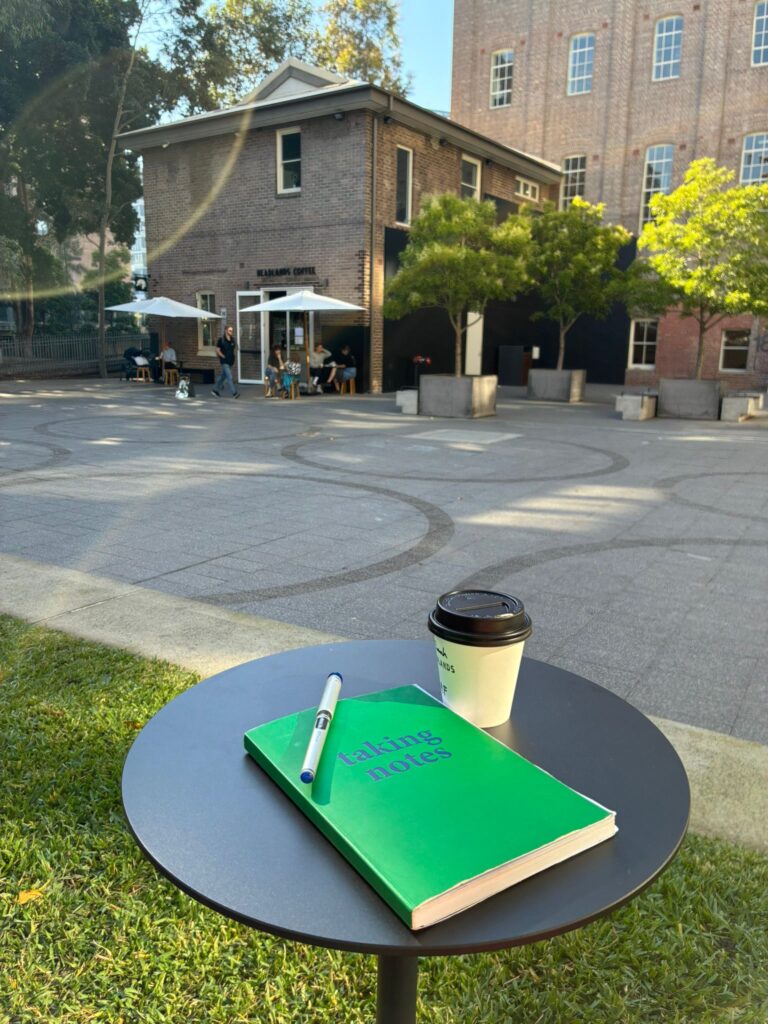
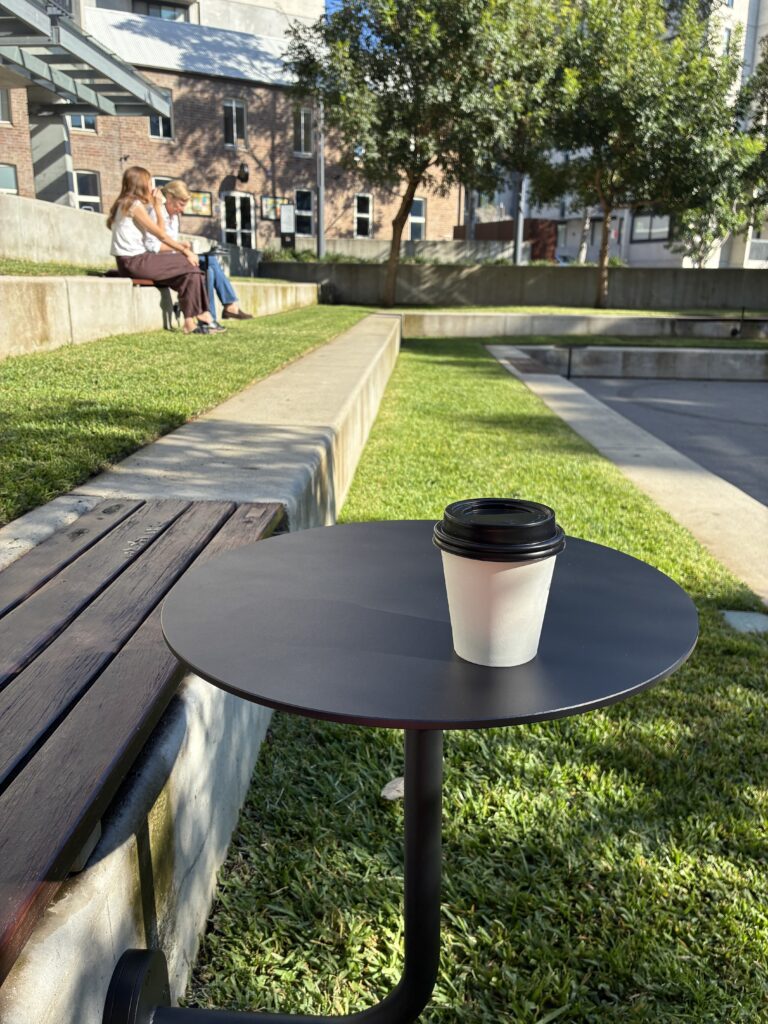
Our new seating is the Flour Mill saying: you belong here, there’s no rush, this space is yours.
We’re already seeing more people lingering and making use of these new spaces. The best community spaces are never finished, they’re always listening.
Come and unwind at one of our new tables.
References:
*Flour Mill Resident Survey | August 2025 | Collected by the Little BIG Foundation
** Flour Mill Place Audit | February 2026 | Collected by Inhabit Place
Whyte, W.H. (1980) The Social Life of Small Urban Spaces; Gehl, J. (2011) Life Between Buildings, Island Press
Ahmadi & Toghyani (2021) Urban Design International
Project for Public Spaces, “A Primer on Seating” (pps.org); Villanueva et al. (2013) Industrial Health.